August 29, 2026 · Zoe Jovic
3D Visualization in Real Estate: How It Changes What Buyers See and Buy
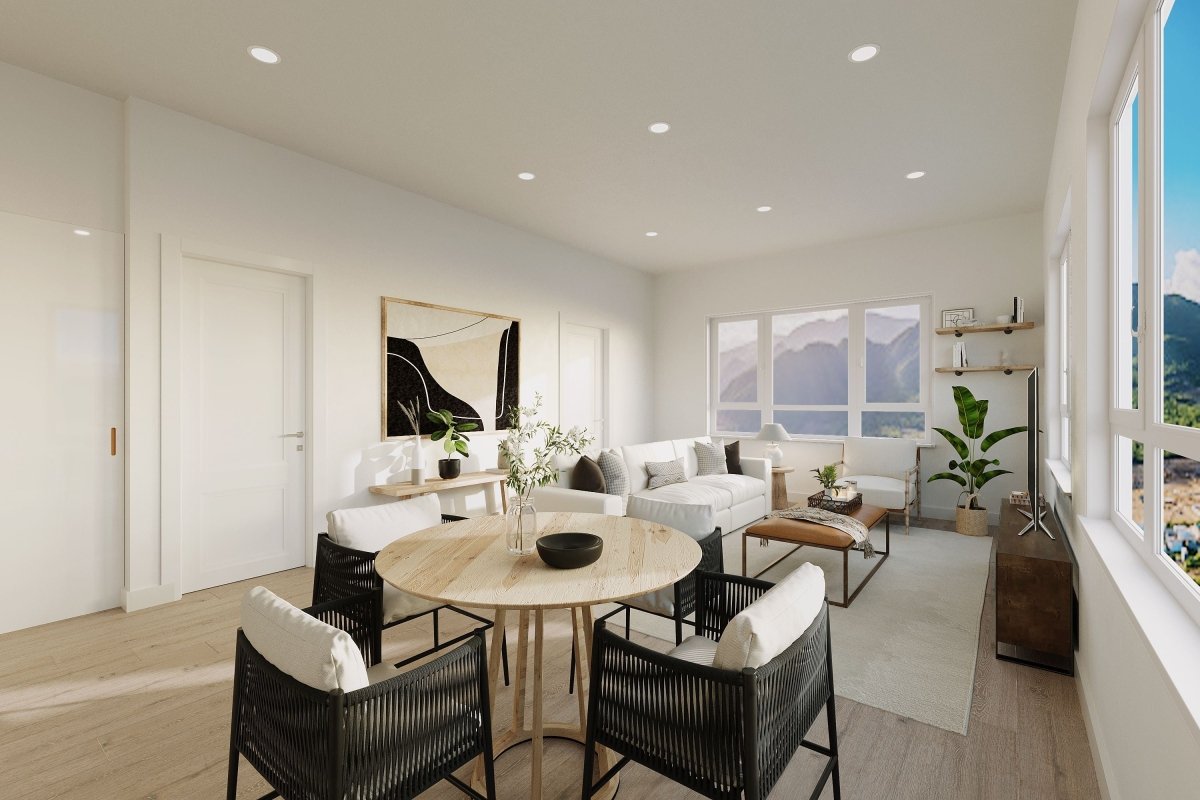
3D visualization in real estate is the use of computer-generated images, 3D floor plans, animations and virtual tours to show buyers a property they cannot fully see in person, because it is not built yet, not furnished or not in their city. It works because buyers now judge homes online first: the National Association of Realtors reports that 97% of buyers use the internet in their home search, and in Zillow's 2024 buyer survey 70% agreed that 3D tours give a better feel for a space than static photos. For real estate agents, builders and developers, 3D visualization is a powerful tool for property marketing that turns plans and empty rooms into something buyers can picture, trust and act on.
This article looks at 3D visualization from the buyer's side: what potential buyers see, how it changes their decision making, and how real estate professionals can use it in marketing. If you want a property-by-property guide to which renders to order, read how 3D rendering sells new builds, presales and renovations.


3D Visualization Real Estate Basics: What It Includes
3D visualization real estate work, also called architectural visualization, covers every way of presenting a property as a three-dimensional digital model rather than a flat drawing or a plain photo. Studios build the model from architectural plans and architectural designs, then create different outputs from the complete model:
- Exterior renderings: photorealistic images of the building, landscaping and street, often under different lighting conditions such as daylight and dusk.
- Interior rendering: furnished rooms that show layout, finishes, flooring options and interior design choices.
- 3D floor plans: a furnished top-down view that explains how rooms connect.
- Real estate animations: video flythroughs and walkthroughs built from the same model.
- Virtual tours, virtual walkthroughs and digital twins: interactive, navigable models. A digital twin is usually a scan of an existing building; a rendered tour can show a building that does not exist yet.
- Virtual staging: digital furniture added to photos of real, empty rooms.
- Virtual reality and augmented reality: headset walkthroughs or furniture and finishes overlaid on a real space through a phone.
All of these real estate renderings and tours give potential buyers a deeper understanding of a property's layout, materials and potential than photos and plans alone.
What Buyers Actually See: The Data
Most published data on 3D visualization comes from surveys of buyers and agents, and it points the same way:
- 97% of buyers use the internet in their home search (National Association of Realtors).
- 82% of buyers' agents say staging makes it easier for buyers to visualize a property as their future home (NAR, Profile of Home Staging).
- 70% of recent buyers agree 3D tours would help them get a better feel for the space than static photos, and 62% wish more listings had 3D tours (Zillow Consumer Housing Trends Report 2024).
- 70% of new construction buyers took a virtual tour during their search, compared with 59% of existing-home buyers (Zillow, 2023).
- Among prospective buyers, 33% say the floor plan is the most important part of a listing and 20% say 3D or virtual tours are (Zillow, 2023).
There is also evidence on outcomes, though it is narrower. A study commissioned by Matterport, using MLS data from four US markets between 2016 and 2019, found listings with a 3D tour closed at a 4–9% higher price depending on the market and up to 31% faster in the Southern market (Matterport). That research is about 3D tours of existing homes and was funded by a tour vendor, so treat it as a signal rather than a guarantee for rendered visuals.
Note that buyers have not given up on seeing homes in person: in the same 2024 Zillow survey, only 27% said they prefer 3D tours over in-person viewings. 3D visualization earns the showing and the shortlist; it does not replace the visit.


Why 3D Visualization Is a Key Tool in Real Estate Marketing
1. It creates an emotional connection and buyer engagement
Buyers buy the life they imagine in a home. Photorealistic real estate renderings create an immersive experience: they show a lit fireplace, a set table and morning light in the kitchen, which helps prospective buyers picture themselves there. For example, a dusk exterior rendering with warm window light often becomes the perfect image for a listing hero. That emotional connection is what turns scrolling into saving a listing and booking a showing.
2. It gives potential buyers a deeper understanding of space
Most people struggle to read architectural plans or judge the size of an empty room. 3D floor plans and furnished interior renderings show furniture arrangements, room layouts and scale, which removes the guesswork that causes potential buyers to skip a listing.
3. It creates clearer communication and sets client expectations
For builders and developers, 3D visualization aligns everyone on what is actually being sold: materials, finishes, views and layout. Clearer communication up front means fewer surprises at handover and fewer disputes about what the brochure promised. The same models are useful in project presentations to lenders, investors and planning boards, allowing clients and stakeholders to review every detail of the project before it is built.
4. It lets you market properties before construction begins
For any future project, 3D visualization is the only way to show the product and showcase properties that exist only on paper. Developers use exterior renderings and aerials of the whole project to start presales while the construction site is still a hole in the ground. See how Bella supports home builder marketing and pre-selling new construction.
5. It replaces physical staging where staging is impossible
Physical staging only works on a finished, accessible space. Virtual staging and interior rendering deliver furnished, eye catching images for vacant homes, new builds and rooms that have not been finished yet, at a fraction of the logistics.
How 3D Visualization Supports Faster Sales and Better Decision Making
3D visualization mainly helps the sales process and property sales in three ways:
- Qualifying buyers earlier. Interactive tours, floor plans and renders help buyers decide whether a property meets their needs before they visit, so showings go to more serious potential clients.
- Supporting informed decisions. When buyers can see every detail in advance, there are fewer unknowns to slow down decision making and negotiation.
- Protecting perceived value. A vacant or unfinished property can look smaller and colder than it is. Good visuals help buyers see its property value rather than its current state.
For sellers and landlords, fewer unnecessary showings also mean less disruption, and prospective tenants in commercial properties can review space options remotely.
YOU MAY ALSO LIKE:
- What Is 3D Rendering in Interior Design?
- The Top 5 Secrets to Selling Your House A.S.A.P. (with Virtual Staging)
- How Much Do Architectural Renderings Cost? A Transparent Pricing Guide


Where 3D Visualization Fits in Your Marketing
- Listing and project websites: hero exterior renderings, galleries of interiors and 3D floor plans for each unit.
- Listing portals and MLS: renderings for new construction and virtually staged photos for vacant homes, clearly labeled.
- Social media and ads: eye catching images and short real estate animations tend to stop the scroll better than plans.
- Presentation centres: large-format prints, animations and VR walkthroughs for buyers who visit in person.
- Brochures and signage: print-ready renders at high resolution.
- Planning and urban planning consultations: aerials and streetscapes that show a project in its context.
The strongest campaigns reuse the same 3D model across all of these, so every channel shows the same building.
Trends in 3D Visualization for the Real Estate Industry
- Real-time and interactive models: real-time engines let buyers walk through a model and switch finishes or flooring options on the spot.
- Digital twins: scanned 3D models of existing buildings are increasingly used for listings and property management.
- AI-generated images: AI tools can produce quick mood images, but they do not reliably follow real architectural plans. For images a buyer will rely on, a render built from the actual drawings is still the safer choice.
- VR and augmented reality: headsets in presentation centres and phone-based AR for furniture and finishes.
- Sustainability features: solar panels, green roofs and energy-efficient materials shown directly in the visuals.


Real Estate Rendering Services: Exterior Renderings and Interior Rendering Prices
Real estate rendering services and 3D rendering services are usually priced per image, and the rendering process is similar across studios: plans in, draft for review, high quality visuals out. Bella's 3D renders are created by human 3D artists, never AI, and include 3D modeling from your plans, revisions and 4K delivery. Prices in USD:
- Interior rendering, residential: $550 per image
- Interior rendering, commercial: $700 per image
- Exterior rendering, single building: $750 per image
- Streetscape or aerial: $1,000 per image
- Multiple buildings: $1,400 per image
Volume discounts apply automatically: 5% off at 3 or more renders, 10% at 6 or more, 15% at 11 or more and 20% at 21 or more. For vacant homes that already exist, virtual staging is the lower-cost option.
Why Work With Bella Virtual
- Human 3D artists: every render is modeled from your plans by a 3D artist and reviewed by an interior designer.
- Real estate focus: we work with builders, developers, architects, real estate agents and real estate agencies across the US and Canada, on residential and commercial projects.
- A full range of visuals: interior renderings, exterior renderings, aerials, 3D floor plans, virtual staging and virtual renovation.
- Published pricing and turnaround: most interiors in 7–10 business days, larger exteriors in 10–14.


Frequently Asked Questions
What is 3D rendering in real estate?
3D rendering is the part of 3D visualization that produces photorealistic still images of a property from a 3D model. 3D rendering is also the step where lighting, materials and furniture are calculated into a final image. It is used to market homes and buildings before they are built, finished or furnished.
How much do 3D renderings cost?
Most studios charge per image. At Bella, interiors cost $550 USD per residential image, single-building exteriors $750 and aerials or streetscapes $1,000, with volume discounts from 3 images.
How much does a 3D visualizer cost?
Hiring a 3D visualization studio is usually priced per image or per project rather than per hour, and the cost depends on complexity, the number of views and revisions. Compare what is included, such as modeling, revisions and final resolution, rather than headline prices alone.
What is the 3-3-3 rule in real estate?
There is no single official 3-3-3 rule. It is an informal rule of thumb with several versions, most often used as a buyer budgeting guide or an agent follow-up routine. Ask your agent or lender which version they mean before relying on it.
Can I use 3D visualization for a home that is still under construction?
Yes. That is where it is most useful. Renderings and 3D floor plans built from the architectural plans show buyers the finished home while construction is still underway.
Is 3D visualization only for residential properties?
No. It is widely used for commercial properties, offices, retail and mixed-use developments, where it helps tenants and investors understand space and fit-out options.
Conclusion
3D visualization gives buyers what photos and plans cannot: a clear, emotional picture of a property that is empty, unfinished or unbuilt. Used well, it earns more serious showings, supports presales and helps buyers commit with confidence. Explore Bella's 3D rendering services, order an architectural rendering, or contact us for a quote on your next project.