September 28, 2026 · Bella Virtual Staging
How to Stage a NYC Apartment for Sale: Manhattan Co-ops and Condos
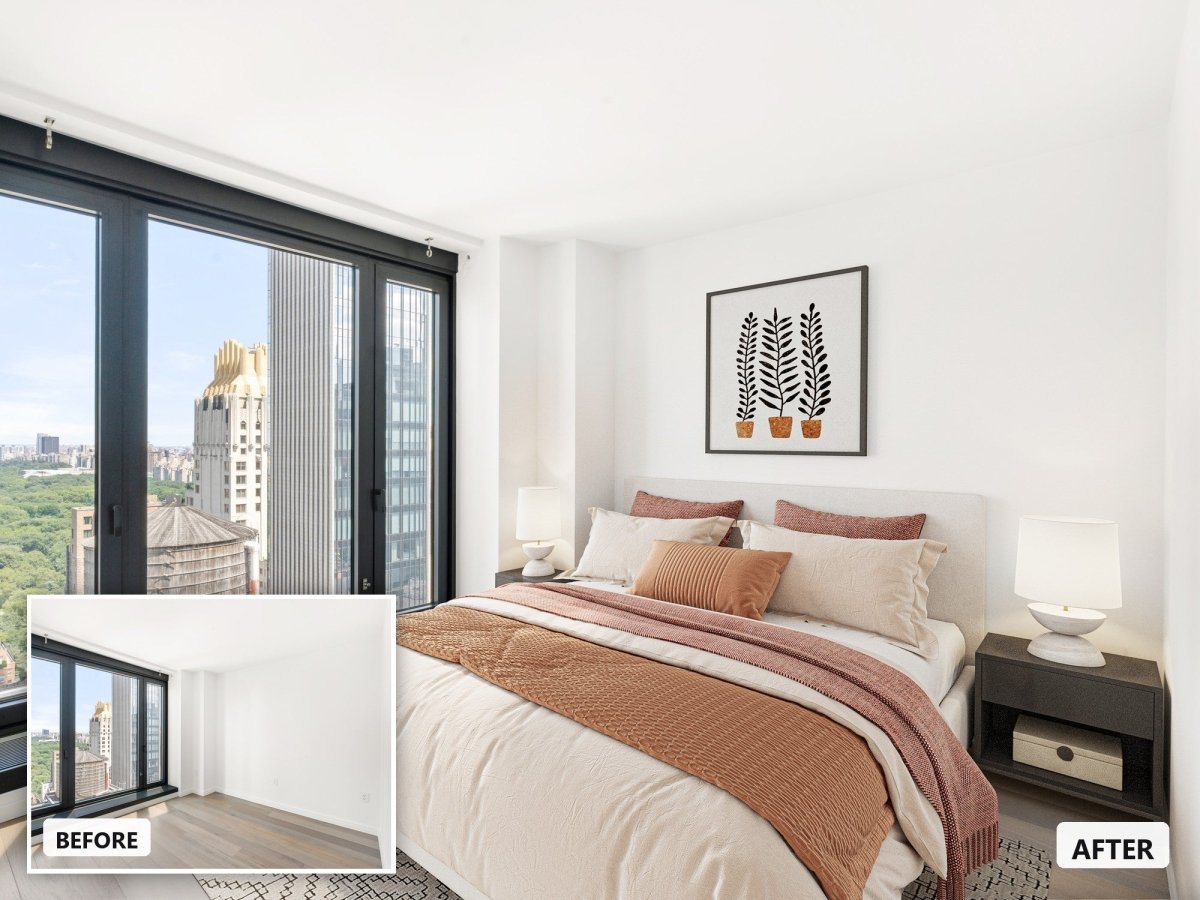
To stage a NYC apartment for sale, clear and repair it, furnish every room at apartment scale so buyers can see it works, keep windows and views open, and make the photos match what buyers will see on the tour. In a co-op, plan any physical staging around the building's rules for movers and deliveries; in any building, disclose virtual staging on the listing. Virtual staging is the fast, low-cost option for vacant, estate or tenant-occupied apartments, and it works for studio apartments and penthouses alike.
Bella Virtual Staging's real interior designers, never AI, stage New York City apartments for agents and brokerages, including Brown Harris Stevens, from $37 USD per photo in 24–48 hours.

What do NYC buyers expect from a staged apartment?
Light, a clear use for every room, furniture that proves the rooms fit real life, and a turnkey feel.
Buyers shortlist online first, so the photos are the first showing, and your apartment has to be easy to remember among the similar listings a buyer scrolls through. Staging should put the specific property's best attributes forward, whether that is high ceilings, a park view, natural light from a bright south exposure, or the proportions of a prewar classic six on the Upper East Side.
Market conditions change how hard the staging has to work. In Brick Underground's reporting on NYC staging, brokers describe staging as especially helpful in a buyer's market, when sales are slow and listings compete for attention, and still useful in a hot market, where it can help push the price up.
According to the National Association of Realtors' 2025 Profile of Home Staging, 83% of buyers' agents said staging made it easier for a buyer to visualize the property as a future home. The living room was the most important room to stage for buyers (37%), followed by the primary bedroom (34%) and the kitchen (23%). In small apartments, the buyer's question is usually scale: can the bedroom accommodate a queen bed, does a real sofa and dining table fit, and where does a desk go? Staging that answers it, by creating defined, functional spaces, makes every square foot read as usable.
How do you stage a NYC apartment for sale, step by step?
Staging a Manhattan apartment means preparing it, editing it, scaling furniture correctly, maximizing light, and then styling for both the camera and the showing.
Step 1: Prepare the apartment
- Deep clean every surface: kitchen, bathroom, windows and any outdoor space such as a balcony or terrace. Buyers notice grout, caulk and window frames in older buildings.
- Patch and paint walls in a light neutral, which makes rooms read calmer and larger.
- Fix small defects: cabinet doors, outlet covers, radiator covers and window hardware.
- Check the building's rules before scheduling any contractor or delivery. Many co-op and condo buildings restrict work hours, require elevator reservations and ask for movers' insurance certificates.
Step 2: Declutter and depersonalize
- Clear most surfaces, put away family photos and collections, thin out closets so storage looks generous, and hide cables and routers.
- Removing personal items gives buyers room to imagine their own lives in the space, and even simple decluttering makes rooms feel larger. In a small apartment, storage is a valuable asset, so let buyers see it.
- In the same National Association of Realtors report, decluttering (91%) and cleaning the entire home (88%) were the most common improvements agents recommended to sellers.
Step 3: Plan the layout at apartment scale
- Use the floor plan to set the traffic flow from the entry. Choose apartment-scale sofas, round dining tables and low-profile beds; oversized furniture is a common mistake that makes rooms read smaller than they are.
- Define the living, dining and work zones with area rugs and furniture placement, especially in open layouts.
- Show at least one work spot, even if it shares space with the living room or bedroom. Multi-functional furniture shows the apartment's flexibility.
- In a studio or small one bedroom, separate sleeping and living areas so the apartment has breathing room.
Step 4: Maximize light
- Hang simple window treatments high and wide so windows feel larger, and skip heavy drapes.
- Place mirrors opposite or next to windows to reflect natural light deeper into the room.
- Use the same warm bulbs throughout so the lighting in photos is even.
- Turn on every lamp for photos and showings, and schedule the photographer for the time of day the apartment gets its best light.
Step 5: Style for photos and showings
- Keep the palette neutral with a few accents, such as art, throw pillows and a blanket, to add warmth without overwhelming the room.
- Use hotel-style bedding, fluffy white towels and fresh flowers to signal a move-in-ready home and build an emotional connection with buyers.
- Downplay the television. If it must stay, style it with a low media unit and art around it rather than making it the focal point.
- Walk the space as if at an open house and clear anything that creates a bottleneck between the sofa and the dining area or around doorways.
- Use vertical space, such as floating shelves and tall, narrow storage, where floor space is limited.
For room-specific advice, see our guide on how to stage a living room.
How do you stage small spaces and high floors in Manhattan?
Small spaces demand discipline, and limited square footage leaves no room for furniture that doesn't earn its place. Every piece should do one clear job, or serve multiple purposes: a console that doubles as a desk, a bench with hidden storage, a drop-leaf dining table. Compact living is the norm in Manhattan, and staging should make it look deliberate. In studio apartments, where one room has to do everything, define sleeping, living and dining zones so buyers can see how a day works. Pull furniture off the walls only where it improves the flow; floating a loveseat in the middle of a tiny living room wastes floor space. Stage alcoves as a dining nook or office rather than leaving them ambiguous.
Room counts matter. StreetEasy's Listings Quality Policy (section 4.5) says only legal rooms and bedrooms as defined by the Multiple Dwelling Law and Housing Maintenance Code should be counted, and units must be advertised as they exist today. So stage a windowless room or alcove as an office or dressing room, never as a bedroom. Presenting each room's function honestly builds trust with serious buyers of small spaces, where every room counts.
On high floors, the view is the amenity. Never block windows with tall bookcases or high-backed furniture, and face the seating toward the view so the skyline or the river is the first thing buyers see. Shoot at the time of day when the view and the light are at their best. Never alter or add a view in editing: the listing must present a true picture of the apartment.
How is staging a co-op different from staging a condo?
The two are owned and sold differently, and that changes how you stage. According to StreetEasy's co-op vs. condo guide, a co-op buyer purchases shares in the corporation that owns the building and receives a proprietary lease, and must submit an extensive application and be interviewed and approved by the co-op board, which can reject a buyer. Condo approval is simpler: the condo board typically holds a right of first refusal, which it usually waives. Condos generally allow more flexible subletting and pied-à-terre use, co-ops tend to be in older buildings, and condos are more often new construction with more amenities.
- Co-ops: the board process adds time to a co-op sale, so presentation that attracts well-qualified buyers early matters. Physical staging means following the building's rules for deliveries, elevator reservations and movers' insurance certificates, so check with the managing agent before booking anything. Stage in a classic, neutral style that suits the building and appeals to a broad market.
- Condos: newer condo buildings often have a gym, a roof deck, a pool or other common areas, so photograph the amenities as part of the listing. Because condo rules on subletting and pied-à-terre use are generally more flexible, the buyer pool can include people shopping from out of town, and the photos have to do more of the work. Style can lean more contemporary while still suiting a wide range of tastes.
- Either: virtual staging avoids building logistics entirely. Nothing is delivered, no elevator is reserved and no insurance certificate is filed. Virtual staging gives buyers furnished photos without any of it.
What are the disclosure rules for virtually staged photos on REBNY RLS and StreetEasy?
Disclose virtual staging on the listing, don't change permanent features, and keep the original photos. Bella includes disclosure guidance with every order and recommends noting virtual staging on the listing. A National Association of Realtors article on virtual staging puts it the same way: under Article 12, make sure virtually staged listing photos are clearly labeled as such.
NAR Code of Ethics, Article 12: "REALTORS® shall be honest and truthful in their real estate communications and shall present a true picture in their advertising, marketing, and other representations." Standard of Practice 12-10 extends this to images and prohibits misleading consumers, "including use of misleading images." (NAR Code of Ethics)
StreetEasy Listings Quality Policy: photos must be of the actual unit (section 4.4); units must be advertised as they exist today, not with details of potential renovations (section 4.5); and agent names, logos or contact details are not allowed on listing photos (section 3.1).
REBNY RLS: under the RLS Universal Co-Brokerage Agreement rules, the listing broker and agent are responsible for the accuracy of listing information, including the photographs. Follow your brokerage's disclosure policy and check the current RLS rules, which REBNY updates periodically.
Where regulation is heading: in July 2026, New York City Mayor Zohran Mamdani proposed requiring clear and conspicuous disclosure when rental listing photos or videos are AI-generated or digitally altered, as part of the city's Rental Ripoff Report. It is a proposal for rental listings with no set implementation date, but it shows the direction of travel.
Virtual renovation images, where floors, cabinets or counters are changed digitally, should be labeled as concepts and shown alongside the original photo. See Bella's virtual renovation service.
How much does it cost to stage a NYC apartment: physical vs virtual?
Physical staging in NYC typically starts around $5,000 for a studio, according to stagers quoted by Brick Underground in 2023. Bella's virtual staging is $37 USD per photo.
According to Brick Underground (May 2023), NYC stagers price by square footage or number of rooms, with $5,000 as a general entry price. One full-service stager quoted $5,000 for a studio, $8,000 to $12,000 for a one-bedroom, $15,000 to $20,000 for a three-bedroom and $25,000-plus for larger homes. Another quoted packages starting at $5,000 for a studio, $6,000 for a one-bedroom, $7,000 for a two-bedroom and $8,000 for a three-bedroom, with trucking charged separately. A third said it tries to cap its fees at or below 1% of the asking price. These are 2023 quotes from individual NYC stagers, not an industry average.
The same article lists ways to spend less money on professional staging: stage only one or two rooms, with the focus on common areas such as the living and dining areas and the primary bedroom, or pay a stager for a design plan and rent and set up the furniture yourself.
Bella's virtual staging is $37 per photo, the same for luxury listings. Volume discounts apply automatically: 5% off at 3+ photos, 10% at 6+, 15% at 11+ and 20% at 21+. Furniture removal is free with staging.
Worked example: 8 photos × $37 = $296, less 10% at 6+ photos = $266.40.
| Option | Typical cost | What you get |
|---|---|---|
| Physical staging, studio | From about $5,000 (Brick Underground, 2023 quotes) | Design, furniture rental, installation and removal |
| Physical staging, one-bedroom | $6,000 to $12,000 (Brick Underground, 2023 quotes) | The same, with more furniture |
| Physical staging, three-bedroom | $8,000 to $20,000 (Brick Underground, 2023 quotes) | The same, with more rooms |
| Bella virtual staging, 8 photos | $266.40 (Bella's price, after the 10% volume discount) | Photorealistic staging by real designers, 24–48 h delivery, unlimited revisions for 2 weeks |
The difference is large. Virtual staging delivers furnished listing photos for a fraction of the cost of a professional staging company, with no delivery fees, no elevator scheduling and no furniture to remove after the accepted offer.
When does virtual staging make more sense than physical staging?
Virtual staging is the stronger choice when physical staging is difficult, expensive or impractical:
- Vacant apartments: empty rooms photograph smaller than they are, and virtual staging shows scale without renting a single piece of furniture.
- Estate sales: inherited, unoccupied apartments can show their potential without anyone furnishing them.
- Sponsor and investor units: finished-but-empty units in new buildings can be listed with furnished photos straight away.
- Tenant-occupied apartments: StreetEasy requires tenant occupancy to be disclosed in the listing description (section 4.8). Photos of a furnished, occupied apartment can be cleared with free furniture removal and restaged, without asking the tenant to move anything.
- Buildings where deliveries are hard to schedule: narrow elevator windows, delivery restrictions or strict insurance requirements make physical staging a logistical burden.
An honest caveat: some NYC brokers prefer physical staging for the highest-priced listings, where the in-person tour has to match the photos. A hybrid approach, physical staging in the main rooms and virtual staging in secondary rooms, keeps the budget under control while keeping the photography strong.
Bella's process: real interior designers, never AI, photorealistic results in 24–48 hours, unlimited revisions for two weeks, and a rework-or-refund guarantee. See virtual staging in New York or luxury virtual staging for high-end Manhattan listings.
Checklist: staging a Manhattan apartment that sells
Use this checklist before the photographer arrives:
- Repairs and paint done: walls patched, a light neutral colour, every fixture working.
- Surfaces clear: counters, tables and vanities hold one or two items at most.
- Every room has an obvious use: bedroom, living room, workspace, dining area.
- Furniture at apartment scale, with nothing oversized crowding the floor.
- Windows and views open, with treatments hung high and wide and sightlines unblocked.
- Photos match the tour: what buyers see online is what they see in person.
- Virtual staging disclosed to buyers and Realtors, and original photos kept on file.
- Building rules checked before any delivery or contractor visit.
Whether you stage physically, virtually or both, the goal is the same: an apartment that looks worth its price. Ready to see your listing staged? Try Bella's virtual staging: $37 per photo, designed by real interior designers and delivered in 24–48 hours.
Frequently asked questions
Should I stage my NYC apartment before or after listing?
Before the photos are taken, so the best version of the apartment appears on StreetEasy and the RLS from day one. If a listing has gone stale, restaging and reshooting the photos can give it a fresh start.
Is staging worth the investment in Manhattan?
In the National Association of Realtors' 2025 Profile of Home Staging, 49% of sellers' agents said staging reduced the time a home spent on the market, and 29% of agents reported a 1% to 10% increase in the dollar value offered. In our experience, staging helps listings sell faster and over asking, especially small or awkward layouts where buyers need help seeing how the space works.
Do you use AI to virtually stage NYC apartments?
No. Every photo is staged by a real interior designer whose expertise is NYC apartments and furniture scale. AI apps can misjudge scale, distort walls and windows or alter permanent features, which risks misleading buyers and breaching the "true picture" standard.
What's the difference between virtual staging and virtual renovation?
Virtual staging adds furniture and decor only, such as a sofa, a bed, a desk, rugs and flowers, without changing anything permanent. Virtual renovation changes finishes like floors, cabinets, counters and fixtures, and can show layout concepts on request. Both should be clearly disclosed on the listing. See Bella's virtual renovation service for dated co-ops and condos.