November 5, 2025 · Kien Nguyen
Furniture Rental for Staging: Affordable Solutions for Realtors and Sellers
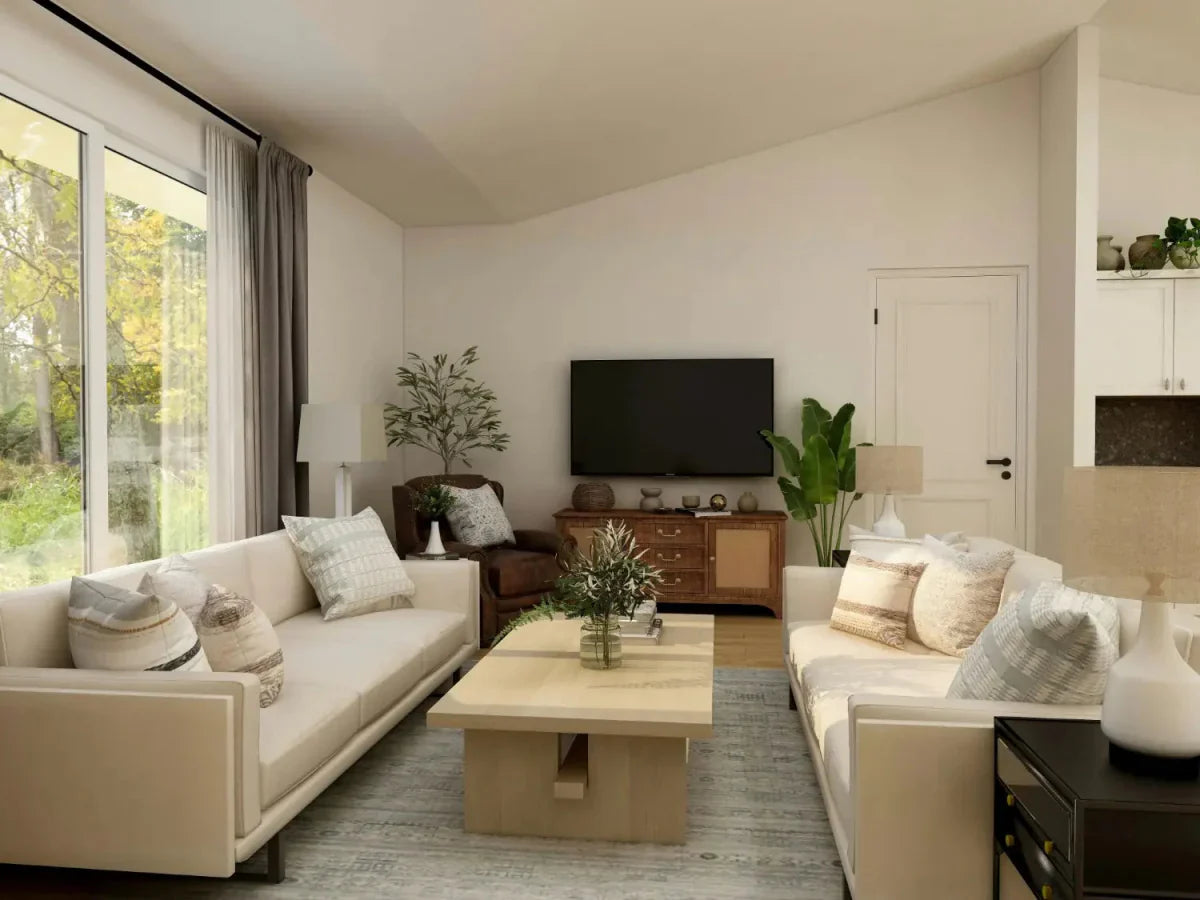
Empty rooms photograph cold. Furniture rental for staging is how sellers and agents fix that without buying anything — a rental company delivers curated pieces, arranges them, and takes it all away once the property sells.
This guide covers what it costs, when it is worth it, how to get started, and where virtual staging does the same job for less.
Highlights
- Renting is far cheaper than buying for short-term use, and it protects cash flow.
- Flexible packages let you match style to the property and the buyer rather than reusing one set.
- Providers handle delivery, setup and pickup, which is most of the value for a busy agent.
What furniture rental for staging actually is
You temporarily furnish a home to make it more appealing to buyers. Rather than owning inventory, you rent curated pieces for a set period; the company delivers, styles the rooms, and removes everything after the sale.
The case for it is well documented. The 2025 NAR Profile of Home Staging found 83% of buyer's agents say staging makes it easier for a buyer to picture a property as their future home, 49% of seller's agents saw a decrease in time on market, and 29% reported offers 1% to 10% higher in dollar value.

A note on the numbers you will see elsewhere: claims that staged homes spend "73% less time on the market" or sell "20% higher" circulate widely and do not appear in NAR's research. The real figures above are strong enough without inflating them, and quoting the inflated ones in a listing presentation is a risk if a seller checks.
Why agents and sellers use it
Cost. Buying furniture for each listing ties up capital. Renting gives you designer-quality pieces for a fraction of the outlay. Bankrate puts typical staging budgets at roughly $832 to $2,927 nationally, averaging about $1,844 — with vacant properties adding monthly furniture rental on top, which many providers roll into a flat package.
Flexibility. Buyer taste shifts. Renting means you match the look to each property — sleek for a downtown condo, warmer for a suburban family home — without being stuck with last season's inventory.
Convenience. The provider handles delivery, setup and removal. For most agents this is the real reason to rent rather than own: it removes the logistics entirely.

The benefits, specifically
Lower upfront cost than buying
You get high-end pieces without owning a warehouse. For an agent running several listings, that difference is the difference between staging every property and staging the one you can afford to.
Style that stays current
Trends move — neutral tones one season, bolder texture the next. Rental inventory updates with them; owned inventory dates in place.
Designer-selected pieces
Many providers work with interior designers, so pieces are scaled to the room rather than merely placed in it. Scale is where most staging quietly fails.
No storage, maintenance or depreciation
No storage fees, no cleaning, no wear. The company removes everything after the sale and the home is left clean.
How to get started
- Research providers. Look for curated packages, flexible terms, and clear pricing rather than quote-on-request.
- Choose full package or custom selection. A pre-designed set for living, dining and primary bedroom covers most listings; custom makes sense for unusual spaces.
- Match the design to the property. Modern lines for a condo, something warmer for a country home. Pick for the likely buyer, not your own taste.
- Plan the logistics around the photoshoot. Delivery has to land before the photographer, not after. Most companies can set up within a day or two.
- Read the fine print. Rental length, damage policy, delivery and removal fees. A floor plan speeds up quoting considerably.
For agents running several listings at once, pairing physical rental on the hero property with virtual staging or virtual furniture removal on the rest is usually the cheapest way to get every listing looking finished.
Mistakes to avoid
- Over-staging. More furniture is not better design. Leave room to move and to imagine.
- Mismatched style. Keep furniture consistent with the architecture and with local buyer taste.
- Ignoring the rooms that decide it. NAR puts the living room first (37%), then the primary bedroom (34%) and kitchen (23%). Stage those before anything else.
- Rushing the timeline. Allow time for delivery, setup and photography before the listing goes live.
See also: Staging furniture for sale: how to choose the right pieces and home staging furniture styles for 2026.
The virtual alternative
At Bella Virtual Staging, every image is composed by a real interior designer rather than generated by an AI tool. Staging is $37 per photo, back in 24 to 48 hours, with unlimited revisions for two weeks after delivery.

The comparison, plainly: rental furniture costs $100 to $300 per room per month and puts real furniture in the house. Virtual staging costs $37 once and puts it only in the photographs. If your buyers decide from the listing gallery — as out-of-town and relocating buyers always do — virtual does the same job for a fraction of the cost. If the sale turns on the in-person walkthrough, rental earns its money.
Plenty of agents use both: rental on the hero listing, virtual on the rest.
Beyond staging, Bella also offers virtual renovation, virtual house tours and 3D rendering, across the United States and Canada.
FAQs
What does furniture rental for staging cost? Commonly $100 to $300 per room per month, depending on quality and market. Full staging budgets including labour typically run $832 to $2,927 per Bankrate, averaging around $1,844.
Do I need to rent for every room? No. Focus on the living room, dining area and primary bedroom — the rooms buyers actually weigh.
How long can I keep rented furniture? Most contracts are flexible and extendable if the listing takes longer than expected. Confirm the extension rate up front, because that is where a predictable cost turns into an unpredictable one.
Who handles delivery and setup? The provider, normally — delivery, assembly and removal included. Confirm it, since it is the main thing you are paying for.
Can virtual staging replace physical rental? For the online listing, yes, and at a fraction of the cost. For an open house or a buyer walking through, no — a virtually staged home is still an empty home when someone opens the door. Choose based on where your buyers actually decide.
Conclusion
Furniture rental helps a property stand out without the cost of ownership, and for listings that sell in person it is money well spent. For listings that sell on the screen, virtual staging at $37 a photo gets you there faster and cheaper.