February 24, 2025 · Zoe Jovic
Home Staging Furniture Styles: A Guide for 2026
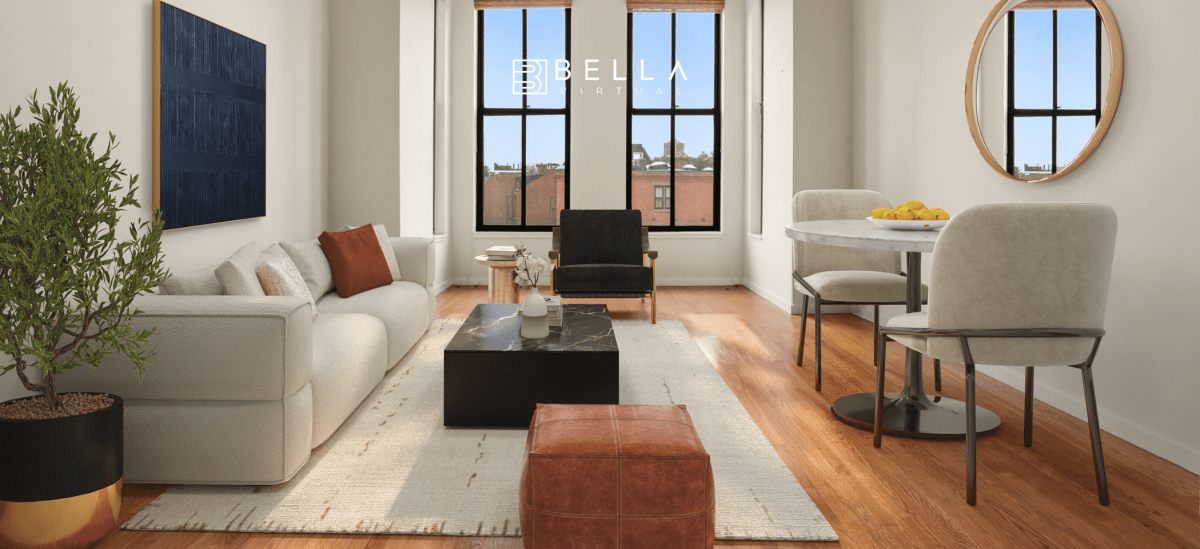
Furniture choice is the part of staging that decides whether a buyer feels something. Layout gets them through the photo; style is what makes a room read as theirs. Choose it for the wrong buyer and a well-executed staging job still lands flat.
This guide covers the furniture styles working in 2026, which buyer each one speaks to, and how to pick between them for a specific listing. Our designers work in virtual staging, but the styles are identical to physical staging — only the delivery differs.
Why furniture style matters more than it looks like it should
Staging exists to help a buyer picture living somewhere. Empty rooms read as cold and, worse, as ambiguous — people cannot tell whether their sofa fits or where the bed goes. Furniture answers both questions at once, and the style of that furniture decides who feels at home.
Four things follow from getting it right:
- Targeting. What sells a family home in the suburbs is not what sells a downtown one-bedroom to a first-time buyer. Style is how you speak to one of them.
- Emphasis. The right pieces highlight a room's strengths — ceiling height, light, a fireplace — and quietly downplay its weaknesses.
- Scale. Furniture that is subtly too large is the single most common staging error, and it makes rooms look smaller than they are.
- Consistency. A listing where every room shares a coherent style reads as a home. One where each room has its own idea reads as a catalogue.


The twelve styles worth knowing
Modern
Clean lines, neutral colours, minimal decor. By a wide margin the most requested style, because it flatters newer architecture and offends nobody. Best for: new builds, condos, anything where the architecture should be the hero.
Traditional
Elegant furnishings, richer colour, symmetrical arrangements. Reads as stable and established. Best for: colonials, older homes with formal rooms, established neighbourhoods.
Transitional
Traditional warmth with contemporary simplicity — classic shapes, modern finishes, soft neutrals with occasional colour. The most broadly appealing option, and the safe answer when the buyer profile is genuinely mixed. Balance depends on scale: the mix has to feel intentional rather than crowded. Best for: suburban homes, families, professional couples.
Minimalist
Simplicity and function. Neutral tones, a few statement pieces, deliberate empty space. Different from modern in that the restraint is the point rather than a byproduct. Best for: small spaces that need to breathe, and buyers who read clutter as stress.
Scandinavian
Light woods, pale neutrals, clean lines, plants. Bright and airy, and forgiving of rooms with limited natural light because the palette does the lifting. Best for: apartments, north-facing rooms, younger buyers.
Japandi
Japanese minimalism crossed with Scandinavian function — natural materials, restrained palette, very few objects. Currently one of the most requested styles from our clients, and it photographs exceptionally well. Best for: modern builds, calm primary bedrooms, higher-end listings.
Farmhouse
Rustic warmth, natural materials, vintage pieces, soft textiles. Best for: character properties, rural and semi-rural listings, family buyers.
Industrial
Exposed brick, metal, reclaimed wood, utilitarian pieces, open plans. Best for: lofts, converted buildings, urban buyers who want the building's history visible.
Coastal
Light and airy colour, natural textures, relaxed furniture. Best for: waterfront property, warm-climate markets, and any listing being sold on lifestyle rather than square footage.
Glam
Velvet, metallics, statement lighting, a deliberate touch of sparkle. Best for: upscale listings where restraint would read as underselling.
Eclectic and Bohemian
Mixed styles, layered texture, bold colour and pattern. Useful for showing personality and potential, and risky if overplayed — the goal is a home a buyer can imagine adapting, not one that already belongs to someone with strong taste.
Vintage and Retro
Mid-century shapes, Art Deco touches, antique pieces. Nostalgia sells, particularly in period properties where modern furniture fights the architecture.


Colour in 2026
Colour sets the mood before a buyer registers a single piece of furniture. What is working now:
- Neutrals — beige, taupe, grey, warm white. Still the foundation, because they let a buyer project onto the room instead of reacting to it.
- Earthy greens and terracotta — the strongest current trend. Calming, warm, and they photograph without going flat.
- Bold blues and deep reds — used as accents rather than fields. Adds drama to a room that would otherwise read as generic.
- Pastels — blush, lavender, soft blue. Gentle and inviting, and particularly effective in bedrooms.
- Monochrome schemes — varying shades of one colour. Sleek, modern, and very hard to get wrong.
- Metallic accents — gold, bronze, brushed steel in hardware and lighting. A small amount does a lot.
Trends shaping furniture selection
Sustainability. Bamboo, reclaimed wood, recycled metal and upcycled pieces increasingly show up in staging because buyers respond to them, particularly younger ones.
Multifunctional pieces. A dining table that reads as a workspace, a sofa that suggests a guest bed. In smaller listings this does real work, because it answers the buyer's unspoken question about whether the space is enough.
Smart and tech-integrated furniture. Charging surfaces, adjustable beds, a credible work-from-home corner. Staging a home office is now close to mandatory in most markets.
Biophilic touches. Wood, stone, plants, organic shapes. Cheap to add and disproportionately effective in photographs.
Maximalism, carefully. Layered colour and pattern is having a moment in interiors, but staging is not interior design — the job is broad appeal, not self-expression. Use it as an accent, in one room, for a listing whose buyer will respond to it.


How to choose for a specific listing
Work through it in this order:
- Who is the likely buyer? Not who you would sell to — who the comparables actually sold to. Family, first-timer, downsizer, investor.
- What does the architecture want? A 1920s bungalow fights modern furniture. A glass-walled condo fights farmhouse.
- What does the neighbourhood expect? Style norms are local, and a listing that looks out of place looks overpriced.
- Then check scale. Whatever style you land on, wrong-sized furniture undoes it. This is where most staging fails, physical or virtual.
When the buyer profile is genuinely mixed, transitional is the reliable answer. When you are not sure between two directions, stage the same room both ways and compare — which is trivially cheap virtually and prohibitive physically.
Physical furniture or virtual?
The styles are the same either way. What differs is cost and reversibility.
Physical staging runs $400 to $2,400 per room per month, plus a five-to-seven day lead time, and changing style means a second installation. Virtual staging is $37 a photo, back in 24 to 48 hours, and a second style is a second order rather than a second truck.
The honest trade-off: a buyer walking through a physically staged home sees furniture; a buyer walking through a virtually staged one sees an empty room. If your sale turns on the in-person visit, physical earns its cost. If it turns on the photographs — which for out-of-town and relocating buyers it always does — virtual wins on every axis.
Whichever you use, disclose virtual staging on the listing. Most MLSs require it, and California's AB 723 has required the original image alongside the staged one since 1 January 2026.
Related reading
- Retro design styles and their resurgence
- Case study: virtual staging sells a stagnant listing
- Home staging services: what they cost and what they actually do
Stage your next listing
Tell us the style and we will match it to the room and the market — composed by real interior designers, $37 a photo, back in 24 to 48 hours, with unlimited revisions for two weeks after delivery. Start an order, see full pricing, or browse the portfolio.