October 16, 2026 · Bella Virtual Staging
3D Real Estate Photography: How It Works, What It Costs and When to Use It
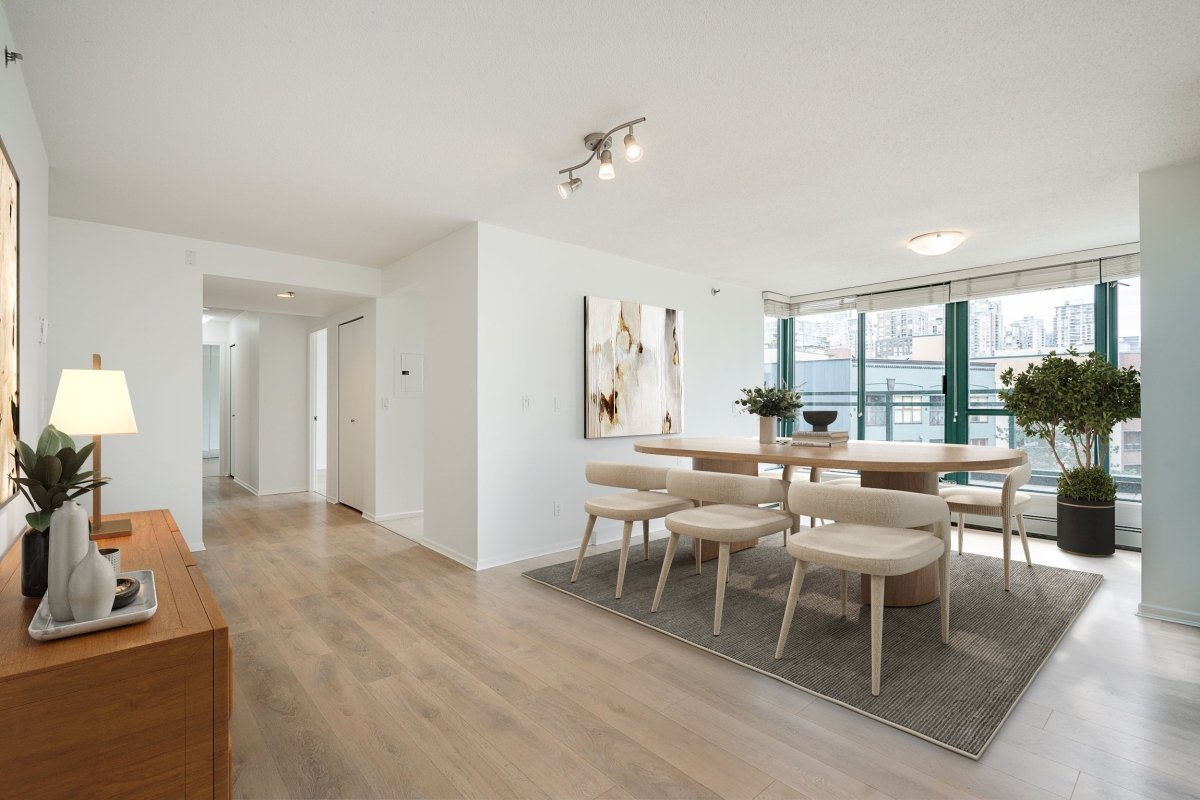
3D real estate photography captures a property as a navigable 3D model instead of a set of flat photos. A 3D camera, a 360 camera or a phone takes panoramas from points around the home, and software stitches them into a 3D tour with a dollhouse view, a floor plan view and walkable rooms. It works best for vacant homes, out-of-town buyers, new construction and commercial properties, and it complements still photos rather than replacing them. This guide covers how 3D tours are captured, what you get, what drives the cost and how to make an empty 3D tour look furnished.
We wrote it from our work at Bella Virtual Staging, a Vancouver-based studio serving real estate agents, photographers and builders in the US and Canada. We don't shoot properties. We edit, stage and render the images that photographers and agents send us, including 360 panoramas for tours, so this is the view from the post-production side.
What is 3D real estate photography?
3D real estate photography is a way of capturing a property so that potential buyers can move through it online, room by room, as if they were walking the house. Instead of choosing a handful of angles, the photographer sets a camera on a tripod at many points around the home. At each point the camera records a full 360-degree image, and depth or lidar data when the camera supports it. Software then aligns those scans into one model, sometimes called a digital twin.
The result is usually shared as a link. Buyers can click through the rooms, look up and down, switch to a cut-away dollhouse view of the whole property or open a floor plan view. In real estate marketing it is one part of the listing media, alongside the photo gallery, the floor plan and video walkthroughs, not a replacement for them. Its job is to give potential buyers an immersive experience of the layout before they visit.
How is 3D different from 360 photos and HDR photography?
The three terms get mixed up, and they describe different products:
| Format | What the buyer sees | Best use |
|---|---|---|
| HDR photography | Flat still photos, each blended from several exposures so windows and shadows both hold detail | The main photo gallery on MLS listings, portals and print |
| 360 virtual tour | Separate panoramas linked by hotspots; you look around from fixed spots and jump between them | Low-cost tours shot with a consumer 360 camera |
| 3D tour | Panoramas placed inside a 3D model, with a dollhouse view, a floor plan view and smooth movement between points | Larger or higher-value listings, remote buyers, new builds and commercial space |
HDR photography still does most of the work. It is what buyers scroll on their phones, and the first photo decides whether they click. A virtual tour, 360 or 3D, gives the buyers who are already interested a way to explore. For the shooting side of still photos, see our real estate photography tips.
How is a 3D tour captured?
There are three common kinds of capture setup for 3D real estate photography, and the choice sets the quality, the features you get and the cost:
- Dedicated 3D cameras. Matterport's Pro3 and Pro2 and iGUIDE's PLANIX cameras pair 360 imaging with depth sensing. iGUIDE's PLANIX R1 uses a time-of-flight lidar scanner and a Ricoh THETA X, and iGUIDE produces measured floor plans from the same scan. This is the professional real estate photographers' tier.
- Consumer 360 cameras. Matterport supports several Ricoh THETA and Insta360 models, and Zillow 3D Home works with Ricoh THETA (X, V, Z1, SC2) and Insta360 (X5, X4, X3, X2, ONE RS 1-inch) cameras. Our 360 camera guide compares the models.
- Phones. The Matterport app can scan with a phone on its own, and lidar-equipped iPhones give better results. Zillow 3D Home can build a basic virtual tour from a phone, but Zillow requires a compatible 360 camera to create its interactive floor plan.
The process is similar on every system. The photographer prepares the space, sets the tripod at about chest height, captures a scan in each room, doorway and hallway, and keeps a clear line of sight between scan points so the software can align them. The data is uploaded and processed into the tour, and the photographer can then edit labels, tags and the starting view before sharing the link.
What do you get from a 3D real estate photography shoot?
A good 3D package gives buyers more than one way to understand the space:
- The walkable tour. Buyers can virtually walk from the front door to the back yard and explore at their own pace.
- Dollhouse view. A cut-away model of the whole property that shows how the rooms and floors connect.
- Floor plan view and schematic floor plans. Most platforms show a top-down plan inside the tour, and some sell a drawn floor plan as an extra. Matterport offers schematic floor plans as a paid add-on, and iGUIDE packages can include measured floor plans.
- Still images. Many systems let you export snapshots from the panoramas. They're handy for social posts, but they rarely match a dedicated HDR shoot for the hero images.
- A shareable link. The virtual tour goes on the listing, your website, emails and social posts. Buyers need only a browser on a phone or computer.

A built-in floor plan view and a rendered 3D floor plan aren't the same thing. The tour's view is functional, while a 3D floor plan is a finished, furnished image for the listing and the flyer. See what a 3D floor plan is for the difference.
Which camera works for a Zillow 3D tour?
For a Zillow 3D Home tour, Zillow lists the supported 360 cameras as the Ricoh THETA X, V, Z1, Z1 51GB, SC2 and SC2 for Business, and the Insta360 X5, X4, X3, X2 and ONE RS 1-inch 360 edition. The Zillow 3D Home app is free. You can shoot a basic tour with a phone, but the interactive floor plan needs one of those 360 cameras.
One thing to know before you choose a platform: in October 2025 Zillow removed Matterport tours from Zillow and StreetEasy listings, blaming CoStar, which owns Matterport. CoStar says Matterport customers can post their tours anywhere. As of mid-2026 the two companies were still disputing it, and Zillow was still not showing Matterport tours. Realtor.com and Homes.com do display them. If Zillow matters in your market, check which tours it accepts before you book a shoot.
How much does 3D real estate photography cost?
There is no single price, because the cost depends on a few choices:
- Who captures it. Shooting it yourself with a 360 camera and a free app costs time, not service fees. Hiring a photographer with a dedicated 3D camera costs more, and it is usually sold as a package with photos.
- Size of the property. More rooms mean more scan points and more time on site, and some platforms count large spaces as more than one hosted tour.
- Hosting. Matterport hosts tours on a subscription plan with a limited number of active spaces. Zillow 3D Home is free but tied to Zillow.
- Add-ons. Measured or schematic floor plans, aerial photos, video tours and virtual staging are each priced separately.
So the honest answer to "how much does a 3D photo cost?" is to get quotes from two or three local photographers for the same property, and ask what is included: hosting time, floor plans, still photos and how long the tour link stays live.
For the post-production side of 3D real estate photography, our prices are public. Staged 360° photos are US$37 each, and we can stitch your panoramas into a tour for US$99. 3D floor plans start at US$70 and 2D plans at US$20. Photo editing starts at US$5 a photo.
When are 3D tours worth it for real estate agents and their listings?
A 3D tour earns its cost when buyers can't easily visit, or can't easily picture the space:
- Out-of-town and relocating buyers, who use the tour to decide whether a trip is worth it. The ones who book a showing after the tour have already pre-qualified the house for themselves.
- New construction and model homes, where a builder sells several homes from one finished plan.
- Larger homes and unusual layouts, where photos can't show how the rooms connect.
- Commercial properties, such as offices, retail units and venues, where tenants want to check the layout before a site visit.
- A competitive market, where a tour stands out on the listing and acts like an open house that never closes.
It's easier to skip a 3D tour for a small, simple unit with a clear layout, or when the home will sell from the photos and the first weekend of showings. Matterport's own learning center makes a case for using both a 3D tour and a video walkthrough, and plenty of listings sell with neither. We don't have data showing that a 3D tour on its own leads to faster sales, so treat it as one tool among several, not a guarantee.
How do you prepare real estate listings for a 3D shoot?
The camera sees every corner, so preparation matters more than for still photos:
- Tidy every room, including closets and the laundry room, because buyers can look in any direction.
- Turn on all the lights and open the interior doors.
- Turn off fans, TVs and anything else that moves, since motion shows up as ghosting where scans are stitched together.
- Plan the route through the house and start at the front door or the street.
- Hide personal photos, paperwork and valuables. A 3D tour is public and stays online.
The steps for 360 photos are in our real estate tours guide.
Can you virtually stage a 3D tour?
Yes. Empty rooms are the hardest to read in a virtual tour, because potential buyers turn around and see four bare walls from every angle. Virtual staging solves that the same way it does for still photos. A designer adds furniture to each panorama so the room has scale and a purpose.

How it works with Bella: you or your real estate photographer shoot 360 panoramas with any 360 camera, and a real interior designer, never AI, stages each one. Staged panoramas come back in 360 format, typically within 24 to 48 hours, ready to load into your tour software. If you'd rather we build the tour too, we stitch and stage it within about three days. Revisions are unlimited for two weeks, and if a result isn't right we rework it or refund it.
One limit: we work on the 360 images themselves, so tours that live only inside Matterport's platform can't be staged in place. For a Matterport listing, we stage the still photos and supply the floor plan.
Disclose virtually staged images wherever they appear. Many MLSs require it, and in California a law in force since January 2026 (AB 723) requires agents to disclose digitally altered listing images and show or link to the originals.

How can photographers offer 3D tours to potential clients?
For photographers, 3D real estate photography is an upsell that fits naturally into a listing presentation. It gives you something to offer beyond more photos, and it brings you back to the same clients for more listings. The capture equipment is the photographer's own set of tools, and the post-production doesn't have to be. Many photographers send us the HDR edits, floor plans and staging and deliver everything under their own brand, so they can spend their time shooting. That is what our white-label program for photographers is for.
Is real estate photography profitable? Like any real estate business, it depends on the local market, how many shoots a day you can fit in and how many add-ons each client buys. Photographers who offer a complete package, with photos, a tour, a floor plan and staging, have more to sell on each listing than those who offer stills alone, while their trade-offs are equipment cost and time on site.
Frequently asked questions
Is 3D real estate photography the same as 3D rendering?
No. 3D photography captures a property that already exists. 3D rendering builds images of a home from plans, often before it's built, so builders can pre-sell.
What is the 3-3-3 rule in real estate?
It is an informal rule of thumb, not an official standard, and people use it in different ways. One common listing version checks a home's marketing after 3 days (is it getting views?), 3 weeks (is the price right?) and 3 months (has the market moved on?). Buyer versions use threes for budgeting and planning instead. Either way, your photos and tour are what buyers see in those first days, so have them ready before the listing goes live.
Do buyers need special equipment to view a 3D tour?
No. A 3D tour opens in a web browser on a phone, tablet or computer.
Can I shoot a 3D tour myself?
Yes. With a supported 360 camera and the Matterport or Zillow 3D Home app, an agent can capture a home without hiring anyone. A professional photographer will usually get cleaner stitching, better light and more polished real estate photos to go with it.
Can you stage a 3D tour of an occupied home?
We can remove the existing furniture from photos and restage the rooms, which suits occupied or cluttered homes. Ask us about your listing first, because heavily furnished panoramas take more work.
Shot a tour of an empty listing? Send us the panoramas through our 360° virtual tour staging service, or start with the still photos through our virtual staging service.