Sign In


Virtual Staging Cost in 2026: What You’ll Really Pay
Bella StagingVirtual staging typically costs between $25 and $75 per photo in 2026. The final price depends on the room’s complexity, the condition of the original photograph, the level of customization, the turnaround time, and the company completing the work. Unlike traditional staging, virtual staging usually involves a one-time cost per image without furniture rentals, delivery fees, movers, installation, or monthly rental charges.
For real estate agents, photographers, home builders, developers, and property sellers, Bella Virtual Staging offers an affordable way to transform empty or outdated property photos into professionally furnished, marketing-ready images.
View Bella’s current options on the professional virtual staging service page.
How Much Does Virtual Staging Cost Per Photo in 2026?
Most virtual staging companies charge per completed image rather than per property or physical room.
A typical market range is:
| Number of Staged Images | Estimated Total Cost |
|---|---|
| 3 images | $75–$225 |
| 5 images | $125–$375 |
| 8 images | $200–$600 |
| 10 images | $250–$750 |
| 15 images | $375–$1,125 |
Low-cost automated tools may be suitable for basic concepts, but the results can contain distorted furniture, inaccurate dimensions, inconsistent lighting, or unrealistic architectural details.
Professional virtual staging generally costs more because it includes design work, perspective matching, realistic shadows, manual editing, and quality control.
The goal is not simply to place digital furniture in a room. The goal is to create an image that looks natural, complements the property, and helps potential buyers understand how the space could be used.
What Is Included in Virtual Staging?
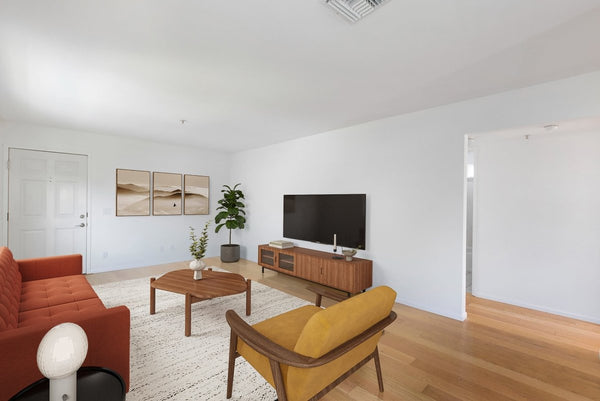
A standard virtual staging service digitally adds furniture and décor to a photograph of an empty or partially furnished room.
Depending on the provider, the price may include:
- Furniture placement
- Interior design style selection
- Rugs, artwork, plants, and accessories
- Realistic lighting and shadows
- Proper furniture scale and perspective
- High-resolution final images
- MLS-ready files
- Furniture or clutter removal
- One or more revisions
- Standard turnaround time
Before ordering, review the provider’s service page carefully. Some companies include revisions and furniture removal in the base price, while others charge for them separately.
What Does Bella Virtual Staging Include?
Bella’s professional virtual staging service transforms empty, cluttered, partially furnished, or tenant-occupied rooms into polished listing images.
Bella’s current virtual staging service includes:
- Images hand-composed by professional interior designers
- Digital furniture and décor placement
- Furniture and clutter removal
- High-resolution, MLS-ready images
- Delivery within approximately 24 to 48 hours
- Unlimited revisions for two weeks after delivery
- Multiple professionally curated design styles
- Indoor and outdoor virtual staging
Bella states that its images are created by real designers rather than produced from generic AI staging templates. Furniture removal is included, and completed images are normally delivered within 24 to 48 hours.
What Factors Affect Virtual Staging Cost?
The final virtual staging cost depends on several factors.
1. Number of Photos
Most providers charge per completed image.
A listing requiring three staged photos will cost less than a property requiring ten or fifteen images. Some companies also offer package savings when several photos are ordered together.
You do not need to stage every photograph in a listing. Focus first on the rooms that have the greatest influence on a buyer’s impression, such as:
- Living room
- Primary bedroom
- Kitchen
- Dining room
- Home office
- Main outdoor entertaining area
- Vacant bonus room
According to the National Association of REALTORS®, the living room, primary bedroom, and kitchen are among the most important rooms to stage for buyers.
2. Size and Complexity of the Room
A simple bedroom is usually easier to stage than a large open-concept living and dining area.
More complex spaces may require additional design and editing time, including:
- Large open-plan rooms
- Lofts
- Luxury interiors
- Irregularly shaped spaces
- Rooms with difficult camera angles
- Commercial properties
- Outdoor living spaces
- Photos showing several connected rooms
When multiple areas are visible in one photo, each area may need furniture and décor to make the final image feel complete.
3. Quality of the Original Photograph
Clear, bright, high-resolution photographs are easier to stage professionally.
Additional editing may be necessary when the original photo includes:
- Poor lighting
- Strong color casts
- Crooked vertical lines
- Extreme wide-angle distortion
- Low resolution
- Distracting reflections
- Clutter or personal belongings
- Damaged or unfinished surfaces
- Obstructed room views
Starting with a good source photo helps the designer create a more realistic result.
For images that need professional correction before staging, Bella also provides real estate photo editing services.
4. Existing Furniture and Clutter
When a room already contains furniture, the original items may need to be removed digitally before new furniture can be added.
This requires the editor to reconstruct areas hidden behind:
- Sofas
- Beds
- Tables
- Chairs
- Cabinets
- Personal belongings
- Decorative objects
Some companies treat furniture removal as an additional service. Bella currently includes digital furniture removal with its virtual staging orders.
This makes the service suitable for vacant properties, occupied homes, partially furnished rooms, and listings with outdated furniture.
5. Interior Design Style
Common virtual staging styles include:
- Modern
- Contemporary
- Scandinavian
- Transitional
- Traditional
- Farmhouse
- Coastal
- Mid-century modern
- Industrial
- Luxury
A standard design style may be included in the regular price. However, highly customized rooms may require additional work.
Customization may include:
- Specific furniture pieces
- Branded commercial interiors
- Unusual color palettes
- Historically appropriate furnishings
- Luxury designer-inspired rooms
- Multiple versions of the same space
- Furniture selected for a specific target buyer
Providing clear instructions and reference images at the beginning of the project can help reduce unnecessary revisions.
6. Turnaround Time
Standard turnaround time varies by provider.
Some companies charge an additional fee for same-day or rush delivery. Others include a standard one- or two-business-day turnaround in the base price.
Bella currently delivers standard virtual staging images within approximately 24 to 48 hours.
To avoid delays, submit all of the following information with the original order:
- High-resolution photos
- Room names
- Preferred design style
- Target buyer
- Color preferences
- Furniture-removal instructions
- Reference images
- Required delivery date
7. Revisions and Additional Versions
Revision policies vary between providers.
Common revision requests include:
- Replacing one furniture item
- Adjusting furniture placement
- Changing a color
- Removing an accessory
- Changing the artwork
- Correcting a missed instruction
- Adjusting the overall design
A revision usually means changing the existing design. Requesting a completely different interior style may be treated as a new version rather than a standard revision.
Bella currently includes unlimited revisions for two weeks after delivery.
Possible Additional Virtual Staging Costs
Depending on the provider, the following services may be included or charged separately:
- Rush turnaround
- Additional design versions
- Highly customized furniture
- Extensive object removal
- Complex photo reconstruction
- Sky replacement
- Day-to-dusk conversion
- Landscaping enhancement
- Exterior virtual staging
- Commercial virtual staging
- Floor or wall replacement
- Cabinet and countertop changes
- Virtual renovation
- Custom architectural rendering
Before ordering, request a clear explanation of what is included.
A professional quote should identify:
- Number of images
- Price per image
- Included services
- Turnaround time
- Revision policy
- Package savings
- Additional editing fees
- Total project price
Virtual Staging Cost Examples
The following examples use the typical market range of $25 to $75 per image.
| Cost Consideration | Virtual Staging | Traditional Staging |
|---|---|---|
| Pricing method | Usually per image | Setup and furniture rental |
| Furniture delivery | Not required | Required |
| Physical installation | Not required | Required |
| Monthly rental fees | None | Often required |
| Turnaround | Often one or two days | Several days or longer |
| Design changes | Completed digitally | May require replacing furniture |
| Online listing presentation | Strong | Strong |
| In-person presentation | Property remains physically empty | Property is physically furnished |
These examples are general estimates. The final amount will depend on the provider, selected currency, project complexity, package discounts, and additional editing requirements.
For example, an agent might choose to stage these five listing photos:
- Living room
- Dining room
- Kitchen
- Primary bedroom
- Home office
At an estimated rate of $45 per image, the calculation would be:
5 images × $45 = $225
Visit Bella’s virtual staging order page to review the current price, currency, and available quantity options.
Virtual Staging vs. Traditional Staging Cost
Traditional home staging requires physical furniture and décor to be delivered and installed inside the property.
The total cost may include:
- Initial consultation
- Furniture rental
- Delivery
- Installation
- Professional styling
- Insurance
- Furniture removal
- Monthly rental charges
Virtual staging digitally furnishes the photo and is generally charged once per completed image.
| Cost Consideration | Virtual Staging | Traditional Staging |
|---|---|---|
| Pricing method | Usually per image | Setup and furniture rental |
| Furniture delivery | Not required | Required |
| Physical installation | Not required | Required |
| Monthly rental fees | None | Often required |
| Turnaround | Often one or two days | Several days or longer |
| Design changes | Completed digitally | May require replacing furniture |
| Online listing presentation | Strong | Strong |
| In-person presentation | Property remains physically empty | Property is physically furnished |
The National Association of REALTORS® reported that the median amount spent when using a professional physical staging service was $1,500. The median was $500 when the seller’s agent personally handled the staging. Actual costs can be higher for large homes, luxury furniture, long rental periods, and difficult delivery locations.
Virtual staging is generally more affordable because there is no physical furniture to purchase, rent, transport, install, store, or remove.
Traditional staging can still be valuable when the in-person showing experience is the main priority. Virtual staging is often more practical when the goal is to improve online listing photos quickly and affordably.
For a more detailed comparison, read Virtual Staging vs. Real Staging: Which Is Better?.
Is Virtual Staging Worth the Cost?
Virtual staging can be a worthwhile investment for vacant, outdated, or difficult-to-understand properties.
An empty room may appear cold, smaller than it really is, or difficult to use. Potential buyers may struggle to understand where furniture should go or whether their belongings will fit.
Professionally staged images can help buyers visualize:
- The purpose of the room
- The scale of the space
- Possible furniture arrangements
- The flow between rooms
- The property’s lifestyle potential
- How the home could look when occupied
In the National Association of REALTORS®’ 2025 Profile of Home Staging, 83% of buyers’ agents said staging made it easier for buyers to visualize a property as their future home.
Virtual staging does not physically change the property, and it cannot guarantee that a home will sell faster or for a higher price. Its purpose is to improve the property’s online presentation and help buyers understand the potential of the space.
View Bella’s virtual staging case studies to see how staged images can support different real estate marketing strategies.
How to Get the Best Value From Virtual Staging
Stage the Most Important Rooms First
You do not need to stage every room in the property.
Prioritize the rooms that influence a buyer’s first impression or are difficult to understand while vacant.
A practical starting point is:
- Living room
- Primary bedroom
- Kitchen or dining room
- Home office
- Vacant bonus room
- Main outdoor area
Submit High-Quality Photos
Use bright, high-resolution images with clear views of the room.
Avoid submitting:
- Screenshots
- Blurry photos
- Low-resolution files
- Extremely dark images
- Heavily compressed files
- Photos with major obstructions
- Images with severe wide-angle distortion
Provide Complete Instructions
Tell the designer:
- What the room will be used for
- Which design style you prefer
- Who the likely buyer is
- Which colors you want
- Which objects should be removed
- Where important furniture should be placed
- Whether adjacent staged images need to match
Clear instructions help the designer produce the right result the first time.
Choose the Style Before Production
Creating several completely different versions of one room may increase the total cost.
Select a style that complements:
- The property’s architecture
- The neighborhood
- The listing price
- The target buyer
- The existing finishes
- The local real estate market
Order Several Images Together
Some virtual staging providers offer quantity-based packages.
Bella’s virtual staging service page displays the current package and quantity options available for an order.
Virtual Staging vs. Virtual Renovation
Virtual staging and virtual renovation are related services, but they are not the same.
Virtual Staging Adds Movable Items
Virtual staging may add:
- Sofas
- Beds
- Tables
- Chairs
- Rugs
- Artwork
- Lamps
- Plants
- Accessories
Virtual Renovation Changes Permanent Features
Virtual renovation may change:
- Flooring
- Wall colors
- Cabinets
- Countertops
- Fixtures
- Built-in features
- Exterior finishes
- Room layouts
- Unfinished spaces
Virtual renovation usually costs more because the editor must modify or reconstruct permanent property features.
For projects that require more than digital furniture, explore Bella’s virtual renovation and staging service.
How to Choose a Virtual Staging Provider
Price should not be the only consideration.
Before placing an order, review the provider’s portfolio and determine whether the staged images look natural and appropriate for the property.
A professional virtual staging provider should:
- Preserve the property’s actual architecture
- Use appropriately scaled furniture
- Match the room’s perspective
- Match the existing lighting
- Create realistic shadows
- Follow the requested design direction
- Explain its turnaround time
- Provide a clear revision policy
- Deliver high-resolution images
- Offer responsive customer support
Poor-quality staging may contain warped furniture, floating objects, incorrect proportions, mismatched lighting, or architectural changes that misrepresent the property.
Professional staging should support the listing rather than distract from it.
Virtual Staging Disclosure and MLS Compliance
Virtually staged images should be clearly disclosed whenever required by the applicable MLS, real estate board, brokerage, advertising platform, or local regulation.
Good practices include:
- Labeling the photo “Virtually Staged”
- Providing the original vacant image
- Preserving permanent architectural features
- Avoiding the removal of property defects
- Not adding windows, doors, or views that do not exist
- Keeping furniture size and placement realistic
- Checking local MLS rules before publishing
Virtual staging should show the potential use of a room without misleading prospective buyers about the property’s actual condition.
Bella recommends disclosing that images have been virtually staged or digitally edited and checking the requirements of the applicable local real estate board.
Frequently Asked Questions
How much does virtual staging cost per photo?
Virtual staging typically costs between $25 and $75 per photo. Basic automated services may cost less, while premium, customized, or complex projects may cost more.
How much does it cost to virtually stage an entire house?
The total depends on the number of listing photos you choose to stage. At a market range of $25 to $75 per image, five staged photos may cost approximately $125 to $375, while ten photos may cost approximately $250 to $750.
Is virtual staging priced per room or per photo?
Most virtual staging companies charge per photograph. If the same room appears in three different listing photos, each angle may need to be staged separately.
How much does Bella Virtual Staging cost?
Bella displays its current per-photo price, currency, and package options on the virtual staging service page. The displayed total may vary according to the number of images, selected currency, package savings, and project requirements.
Does Bella include furniture removal?
Yes. Bella’s current virtual staging service includes digital furniture and clutter removal. Existing items can be removed before new furniture and décor are added.
Are revisions included?
Bella currently includes unlimited revisions for two weeks after delivery.
How long does Bella Virtual Staging take?
Bella’s standard turnaround is approximately 24 to 48 hours. Large or unusually complex projects may require additional coordination.
Is virtual staging cheaper than traditional staging?
Virtual staging is generally much less expensive because it does not require physical furniture rental, delivery, installation, storage, removal, or recurring monthly payments.
Can virtual staging change flooring or cabinets?
Standard virtual staging normally focuses on furniture and décor. Changes to flooring, cabinetry, countertops, walls, fixtures, and other permanent features are generally handled through a virtual renovation service.
Can Bella improve the original property photos?
Yes. Bella provides professional real estate photo editing for images that require correction, cleanup, retouching, or enhancement.
Should every room be virtually staged?
No. Most listings benefit from staging the primary rooms and any spaces that are difficult to understand while empty. Start with the living room, primary bedroom, kitchen, dining area, or home office.
Who usually pays for virtual staging?
The real estate agent, seller, builder, developer, or property manager may pay for virtual staging. The arrangement depends on the listing agreement and marketing plan.
Can virtually staged photos be used on MLS listings?
Virtually staged photos can generally be used in real estate marketing, but disclosure rules vary. Check the requirements of the applicable MLS, brokerage, advertising platform, and local real estate board before publishing.
Final Thoughts
The typical virtual staging cost in 2026 is approximately $25 to $75 per image, although the final price depends on the number of photos, room complexity, customization, source-photo quality, turnaround time, and provider.
Compared with traditional staging, virtual staging provides a faster and more affordable way to present vacant or outdated properties online. Professionally staged images can help buyers understand a room’s purpose, scale, furniture layout, and overall potential.
Ready to transform your property photos?
Order professional virtual staging from Bella Virtual, explore Bella’s virtual staging case studies, or contact the Bella Virtual team to discuss your listing.