Sign In


Is Virtual Staging Worth It?
Bella VirtualShare
For most listings, yes. Virtual staging is worth it because it costs a fraction of traditional staging, turns around in a day or two, and helps buyers picture themselves living in the space, all without moving a single piece of real furniture. Two honest caveats, though. You still have to disclose virtually staged photos, and an empty home will look empty when buyers walk through in person. So the real question is not whether virtual staging works. It is whether it is the right tool for your specific listing.
We design these images for a living, so we will be straight with you about both sides. Here is how virtual staging actually stacks up.
What is virtual staging and how does it work?
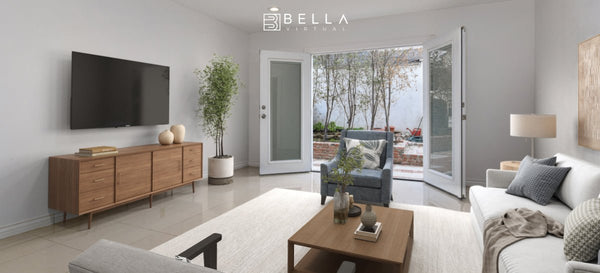
Virtual staging is the practice of adding digital furniture, rugs, art, and decor to a photo of an empty room so the finished image shows a fully furnished space. Physical staging means renting real furniture and arranging it inside the home. Virtual staging skips all that. It layers digital assets onto your listing photos instead, so the room stays empty in real life and only the picture changes.
The process is simpler than most people expect. You send clean, well-lit photos of the empty rooms. A designer picks furniture and a style that suits the architecture, then composites it into the shot, matching the perspective, shadows, and lighting until the result reads as real. At Bella Virtual, that work is done by real interior designers, never AI-generated staging. Good virtual staging is invisible. Bad virtual staging? That is the kind where the sofa floats and the rug ignores the floorboards.
Want the full walkthrough? Our virtual staging service handles the whole thing, with a 24 to 48 hour turnaround and revisions for two weeks.
How much does virtual staging cost vs traditional staging?
Virtual staging typically costs a small fraction of traditional home staging, often the difference between a per-photo fee and a multi-thousand-dollar monthly bill. Think about everything physical staging requires: furniture rental, movers, delivery, and a monthly rate that runs as long as the home sits on the market. Virtual staging requires a photo and a designer. That is the whole cost structure.
Now picture the other side. A stager hauls in real furniture, styles every room, and bills you each month until the place sells. If the listing lingers, the cost just keeps climbing. Virtual staging is a one-time charge per image. You pay once, and the photos work just as hard whether the home sells in a week or three months.
There is a catch worth naming. Traditional staging puts real furniture in the house, so in-person buyers see and feel a finished home. Virtual staging only dresses the listing photos. When buyers tour, the rooms are empty. We will come back to that, because it matters far more for some listings than others.
Does virtual staging help sell a home?
Yes, staging helps buyers connect with a property, and the data backs it up. According to the National Association of Realtors, in its 2025 Profile of Home Staging, A majority (83%) of home buyers' real estate agents said staging a home made it easier for a buyer to envision the property as their future home.
The same report found that Almost half (49%) of home sellers' agents observed that home staging reduced the time homes spent on the market.
A fair word on what those numbers actually mean. The NAR figures cover staging in general, not virtual staging specifically. And there is a chicken-and-egg question hiding in the stats. Do furnished listing photos sell better because the staging works, or because agents who invest in marketing are doing a lot of other things right too? Probably both. Either way, the core mechanism holds. Empty rooms can feel cold and hard to read. A staged photo hands buyers a reference point: where does the bed go, is this room big enough, what would my life look like here?
That is exactly what virtual staging solves. Most buyers start on their phones, scrolling listing photos before they ever book a showing. In a competitive real estate market, a furnished photo stops the scroll where an empty one gets skipped. The listing that looks like a home earns the click, and the click earns the showing.
Do realtors use virtual staging, and do buyers like it?
Realtors use virtual staging widely, especially for vacant listings, new construction, and rentals where physical staging is impractical or too expensive. It has become a standard part of how agents market homes online. Buyers generally respond well to it too, as long as the images are honest and the staging is done with care.
Here is the nuance. Buyers like virtual staging when it helps them picture the space. They do not like it when it deceives them. A virtually staged photo that hides a water stain or makes a tiny bedroom look like a master suite breaks trust the moment someone walks in. That is why high-quality virtual staging sticks to the truth. It furnishes the room. It does not renovate it. The walls, windows, and layout in the photo should match the walls, windows, and layout in real life.
This is also where disclosure comes in, and it is not optional. More on that below.
Is virtual staging worth the investment? The ROI
For a vacant or hard-to-furnish listing, virtual staging is one of the highest-return marketing tools an agent can buy. The math is simple. You spend a modest amount per photo, your listing photos look furnished, your listing stands out online, and the home is more likely to draw showings and offers. Compared to traditional staging, the cost is so low that even a small lift in buyer interest pays for it many times over.
Consider the alternative. An empty listing competes against staged listings in the same price band. Which one gets saved, shared, and toured? The furnished one, almost every time. Virtual staging closes that gap for the price of a few photos rather than months of furniture rental.
That said, the return is not automatic. Virtual staging is only as effective as the photos it starts with and the designer who does the work. Cheap, careless staging can hurt a listing more than no staging at all, because it signals that corners were cut. The investment pays off when the images are clean, realistic, and styled to match the home. That is the whole game.
What are the downsides and disadvantages of virtual staging?
The main downside of virtual staging is the gap between the photo and the in-person reality: the listing looks furnished online, but the rooms are empty when buyers tour. Staging makes the photo sing. It does nothing for the showing. For a buyer who needs to feel a furnished home to fall in love with it, that gap can cost you.
There are a few other cons worth weighing:
- The empty-walkthrough problem. Furnished photos set an expectation. An empty house can feel like a letdown after the listing photos, so manage that disconnect with the buyer's agent or consider light physical staging for the key rooms.
- Quality is everything. Bad virtual staging, with floating furniture or mismatched lighting, looks obviously fake and can make buyers distrust the entire listing. The skill of the virtual stager is the whole product.
- It cannot hide problems. Virtual staging adds furniture. It is not a renovation, and using it to mask defects is dishonest and, eventually, obvious.
- Disclosure is required. You have to tell people the photos are staged, which we will cover next.
None of these are dealbreakers. They are simply reasons to do virtual staging well rather than cheaply, and to pair it with honest marketing.
Do I need to disclose virtual staging in my listing?
Yes. Disclosing virtually staged photos is best practice and, in many markets, a compliance requirement. The simplest rule? If a listing image has been materially altered, say so. A short note like "virtually staged" on or near the photo keeps everything above board and protects you from complaints later.
This is not just a courtesy. The National Association of Realtors Code of Ethics, under Standard of Practice 12-10, prohibits manipulating (e.g., presenting content developed by others) listing and other content in any way that produces a deceptive or misleading result.
A clearly labeled virtually staged photo is not deceptive. An unlabeled one that misleads a buyer can be. Many MLS systems require a disclosure label on altered images, and some states have rules of their own, so check your local MLS and state guidance.
We build disclosure into how we recommend using these images. Real interior designers, never AI-generated staging, and always disclosed. Honest staging is good marketing, full stop.
Is virtual staging as good as real staging?
Virtual and traditional staging do two different jobs, so the better choice depends on the listing. Virtual staging wins on cost, speed, and online impact, where the listing photos do the heavy lifting. Real staging wins on the in-person experience, where a buyer walks into a furnished, warm, lived-in space.
For a vacant home that buyers will mostly discover online before touring, virtual staging is usually the smart call. It is fast, it is affordable, and it makes the photos work. For a high-end listing where the in-person showing is make-or-break, physical staging, or a hybrid of both, may be worth the spend. Plenty of sellers split the difference: virtual staging for the photos, one or two key rooms staged physically for showings. You get the online reach and the in-person punch.
There is no universal winner here, only what is right for your home, your timeline, and your budget.
So, is virtual staging worth it?
For the large majority of listings, virtual staging is worth it. It is far cheaper than traditional home staging, it turns around in a day or two, and it helps buyers picture the space in the place where most of them first see your home: online. Stage honestly, disclose clearly, and use a professional virtual stager who makes the furniture look like it belongs. Do that, and the investment tends to pay for itself in attention alone.
The right staging makes an empty room feel like somewhere a buyer could live. That is the whole point. Have a listing you want to bring to life? Our team of real interior designers can help. Get in touch through our contact page and tell us about the property.
Frequently asked questions
Is AI staging legit?
Quality varies enormously. AI staging tools can produce fast results, but they often distort architecture, warp furniture, or render rooms that look obviously fake, which undercuts trust in a listing. At Bella Virtual, every image is hand-crafted by real interior designers, never AI-generated staging, so the perspective, lighting, and styling hold up to scrutiny. Legitimate AI virtual staging is possible, but it lives or dies on realism and disclosure, not just speed.
Do buyers like virtual staging?
Generally, yes, as long as it is honest. Buyers appreciate furnished photos because empty rooms are hard to read and easy to scroll past. The key is that the staging stays true to the actual space and is clearly disclosed. Buyers dislike virtual staging only when it misleads them about the home's real condition or size.
Is virtual staging allowed on the MLS?
In most cases, yes, provided the images are disclosed as virtually staged. Many MLS systems require a label noting that a photo has been digitally altered, and the National Association of Realtors Code of Ethics prohibits manipulating listing content in a misleading way. Always check your local MLS rules and state regulations, then label your staged photos clearly.
What is the difference between virtual staging and a virtual renovation?
Virtual staging adds furniture and decor to an existing room without changing the structure. A virtual renovation goes further, digitally updating fixed elements like flooring, cabinets, or wall finishes to show a space's potential after improvements. Staging shows the room furnished. A renovation shows the room remodeled. Both should be disclosed when used in a listing.