May 15, 2026 · Bella Staging
Top 10 Home Staging Trends for 2026: Style Tips That Attract Buyers
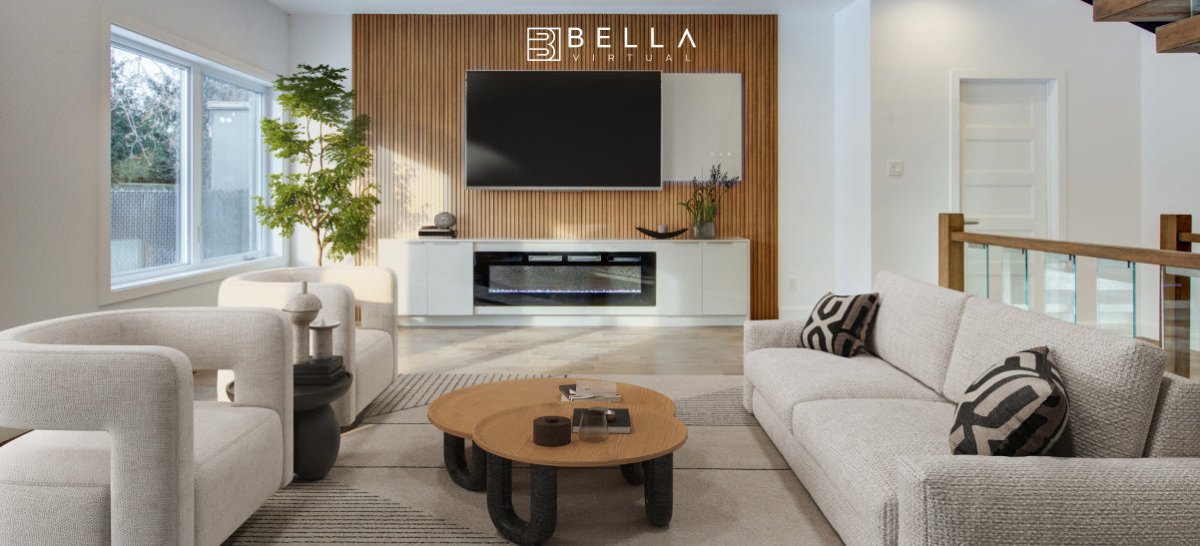
Why Home Staging Matters More Than Ever in 2026
Every year, the question agents ask us is the same: What's actually working right now? In 2026, the answer is more nuanced — and more exciting — than it's been in a decade.
The cold, minimalist interiors that dominated real estate photography for years are losing their grip. Buyers are scrolling through hundreds of listings online before they book a single showing, and they're no longer wowed by bare white walls and floating furniture. They want to feel something. They want to see a life they can step into.
According to the Real Estate Staging Association (RESA), professionally staged homes spend an average of just 9 days on the market. Homes staged with current, on-trend design outperform generic minimalism by 15–23% in final sale price. And NAR research shows that 81% of buyers say it's easier to visualize themselves living in a professionally staged home. With virtual staging now delivering photorealistic results in a fraction of the time and cost of physical staging, there's no reason any listing should hit the market looking dated.
So what are the trends actually moving buyers in 2026? We've pulled insights from staging professionals across North America, interior design forecasters, and our own project data at Bella to bring you the definitive list.
Top 10 Home Staging Trends for 2026
1. Warm Textures & Natural Materials
The era of the perfectly photoshopped showroom is fading fast. In its place, buyers are gravitating toward spaces that feel tactile, warm, and real. Think raw linen upholstery, clay ceramics, oiled hardwood, stone countertops with visible grain, and rugs with a nubby, handwoven quality.
There's neuroscience behind this shift. Research consistently shows that natural textures activate the brain's comfort and safety responses, creating an emotional connection that smooth, clinical surfaces simply can't. When a buyer walks into — or scrolls past — a room layered with warm materials, they slow down. They linger. They start imagining themselves there.
Staging tip: Layer at least three tactile elements per room: a textured rug, a linen or bouclé throw, and a natural-material accent like a ceramic lamp or wooden bowl. Don't match them perfectly — a sense of collected warmth is the goal.
2. Curves & Soft Geometry in Furniture and Architecture
Hard corners are out. Soft geometry — curved sofas, rounded ottomans, arched doorways, circular mirrors, sculptural lighting — continues to surge in 2026, and for good reason. Curves signal comfort. They make a room feel welcoming, social, and human in a way that rectilinear furniture simply doesn't.
From a staging perspective, a curved sectional or a set of softly rounded armchairs in a living room transforms the room's psychological temperature. Buyers instinctively read rounded furniture as "this is a place to gather" rather than "this is a showpiece." That emotional cue is exactly what turns browsers into offer-makers.
Arched doorways — whether architectural originals or decorative additions — are having a particular moment, especially as transitions between key rooms like kitchen-to-family-room or foyer-to-living area.
Staging tip: You don't need to renovate. A curved accent chair, an oval coffee table, or a round jute rug can introduce soft geometry into any room instantly. In virtual staging, this is one of the easiest swaps to make — and one of the highest-impact.
3. Biophilic Design: Bringing the Outside In
Biophilic design — the intentional connection between interior spaces and the natural world — is no longer a boutique concept. In 2026, it's a baseline buyer expectation, particularly among Millennial and Gen Z purchasers who have grown up prizing wellness and sustainability.
This goes beyond a fiddle leaf fig in the corner. True biophilic staging includes oversized leafy plants with architectural presence, maximized natural light through sheer or linen curtains rather than heavy drapes, and materials that reference the natural world — stone, wood, rattan, and natural fiber textiles.
Research on the psychology of nature in interiors consistently shows that biophilic spaces reduce stress, increase feelings of well-being, and make people want to stay longer. For a buyer at a showing, "wanting to stay" is a very good sign.
Staging tip: In your listing photography, prioritize natural light above almost everything else. Sheer curtains, open blinds, and shooting during peak daylight hours will do more for a biophilic staging concept than any furniture choice. In virtual staging, greenery and light optimization can be added in post.
4. Deep, Grounded Color Palettes — The End of Greige
The millennial grey era is over. The ubiquitous soft greige that blanketed listings throughout the 2010s and early 2020s has been replaced by something far more interesting: deep, grounded tones rooted in the natural world.
In 2026, dark forest green is functioning as the new neutral — pairing beautifully with warm wood, brass hardware, and creamy whites. Rich terracotta, warm rust, ochre, and soft blush tones are gaining serious traction in accent walls, upholstery, and cabinetry. Beyond green, warm mineral blues and deep olive are showing up everywhere from kitchen islands to bedroom feature walls.
The key insight is that these colors don't divide buyers — they attract them. Warmer, earthier palettes feel grounded and aspirational without being polarizing. They photograph beautifully, and they give buyers something to remember about the listing.
Staging tip: If you're staging a neutral home, introduce a deep-toned accent through a piece of art, a velvet cushion, or a single painted wall. Terracotta accessories and forest green plants are the fastest way to make a beige room feel intentional rather than bland.
5. Quiet Luxury: Elevated Without Being Cold
"Quiet luxury" has moved from fashion runways into real estate, and it's reshaping what premium staging looks like. The aesthetic is confident rather than showy — curated quality over quantity, with thoughtful editing that makes rooms feel spacious, calm, and high-end without a single piece of chrome or a gallery wall of generic art.
In practice, quiet luxury staging means fewer but better pieces: a single sculptural lamp that commands attention, a well-chosen artwork that anchors the room, a sumptuous throw draped with intention. Empty space is part of the design.
This approach works particularly well for higher-price-point properties, where buyers are often fatigued by over-decorated listings and respond strongly to restraint. Luxury in 2026 is quieter — but more confident.
Staging tip: Editing is the most underrated staging skill. Before adding anything, remove excess furniture until the room breathes. Buyers will perceive the space as larger, calmer, and more expensive — without a single dollar spent on new pieces.
6. Multi-Functional, Flexible Spaces
Remote work isn't a pandemic footnote — it's a permanent feature of how millions of people live. In 2026, buyers are actively looking for homes that can flex: a bedroom that can also serve as a home office, a dining room that doubles as a creative studio, a living area that can accommodate both movie nights and morning yoga.
Staging that highlights a room's versatility without cluttering it is one of the most powerful tools in a seller's arsenal right now. A well-placed desk in a bedroom nook — styled with intention, not crammed in — tells a buyer: this space works hard for you. A reading nook with a single well-lit armchair says the same thing about comfort and retreat.
The homes that sell fastest in 2026 are the ones that show buyers how their life could fit inside them — across all the different versions of their day.
Staging tip: Stage one room in your listing with a clear dual purpose — a guest room styled as a home office-slash-retreat is the most universally appealing. A small desk, a comfortable chair, and good lighting is all it takes to communicate flexibility without visual noise.
7. Statement Stone & Artisan Surfaces
Plain white quartz countertops have peaked. In 2026, stone has become a design protagonist — not just a surface. Dramatic marble with rich amber tones and bold veining, sintered stone with visible texture, patinated zinc and bronze, and terrazzo are commanding attention in kitchens and bathrooms and communicating something important: this home was built with intention.
Statement stone works similarly to quiet luxury — it's a single, high-impact design choice that elevates everything around it. A kitchen island in dramatic natural stone doesn't need much else to make a listing photo stop a scroll. Buyers who care about craftsmanship and materials — a growing segment — will notice it immediately.
In bathrooms, the shift toward spa-like sanctuaries is accelerating. Natural wood, sand tones, and carefully chosen stone are replacing the cold, clinical white tile that characterized a decade of builder-grade bathrooms.
Staging tip: If the stone surfaces in your listing are exceptional, let the photography composition lead with them. Clear the counters entirely — no appliances, no clutter — so the stone reads as the design feature it is. A single vase of stems and nothing else.
8. Modern Heritage: Spaces That Feel Collected Over Time
One of the strongest design shifts in 2026 is a move away from interiors that look like they were purchased in a single afternoon at a big-box store. Buyers — especially younger ones — are responding to what design editors have started calling "Modern Heritage": spaces that feel layered, personal, and assembled over time rather than styled all at once.
This doesn't mean staging with actual antiques. It means mixing eras with intention: a clean-lined modern sofa next to a worn leather armchair, a contemporary art print alongside a traditional wooden side table, a new kitchen with aged brass hardware and open shelving displaying real, imperfect ceramics.
Homes that feel storied rather than staged sell faster in 2026 because they trigger an emotional response that catalog-perfect interiors can't. Buyers feel like the home has a life — and they want to be part of it.
Staging tip: A single vintage or artisan piece per room creates more impact than shelves of trend-forward décor. In virtual staging, we can layer in textured rugs, older-style artwork, and mixed-material furniture that creates this collected aesthetic without the sourcing challenge.
9. Matte Finishes & Limewash Walls
High-shine surfaces are retreating. Matte is the finish of the moment — on walls, furniture, hardware, and cabinetry. The appeal is both aesthetic and psychological: matte surfaces feel softer, more organic, and more expensive in a way that high-gloss simply doesn't communicate anymore.
Limewash and Roman clay wall finishes are the standout trend in this category. These powdery, layered plaster-like textures add incredible depth to a painted wall — creating subtle variation in tone that reads as luxurious and craft-made rather than painted and forgotten. They photograph exceptionally well, adding dimension and warmth that flat paint can't replicate.
Even a single limewash accent wall in a primary bedroom or living room can shift the entire perceived quality of a listing's photography.
Staging tip: If repainting isn't in the budget, swap out any high-gloss hardware for matte black or brushed brass alternatives — an inexpensive update that immediately modernizes a kitchen or bathroom. In virtual staging, matte wall finishes and hardware swaps can be rendered digitally.
10. Strategic Pops of Bold Color
While the overall palette of 2026 staging leans warm and grounded, there's a growing appetite for one well-placed statement of color confidence. Cobalt blue, paprika red, deep terracotta, digital lavender, and saturated mustard yellow are appearing as accent chairs, sculptural vases, art pieces, and even kitchen cabinet colors — and they're working.
The key word is strategic. A single bold element in a neutral room doesn't divide buyers — it gives them something to remember. It's the difference between a listing that photographs generically and one that gets screenshotted and shared. In an era where the first impression is almost always a thumbnail, being memorable matters more than being safe.
Buyers want to feel something when they see a listing. Color — used once, deliberately, in the right place — is one of the fastest ways to make that happen.
Staging tip: Pick one color hero per room and commit. A single paprika accent chair in an otherwise neutral living room, or a deep cobalt ceramic on a white kitchen shelf, is more effective than scattered small pops. The eye needs one place to land.